
Emotional journaling came to me naturally. Even before keeping a journal, I was sending letters to pen pals around the world. That was already my way of making sense of what I was feeling and sharing my thoughts.
Over time, my notebooks and journals became my most faithful companions. And I understood something essential: writing about your emotions isn’t just about recording them. It’s about giving them space, seeing them from a different angle, and noticing more clearly what’s already there.
You don’t need to understand or transform what you feel. Writing can already help you observe it.
In this article, I’ll show you how to practice emotional journaling simply, without pressure, starting tonight.
Why writing about your emotions actually changes something
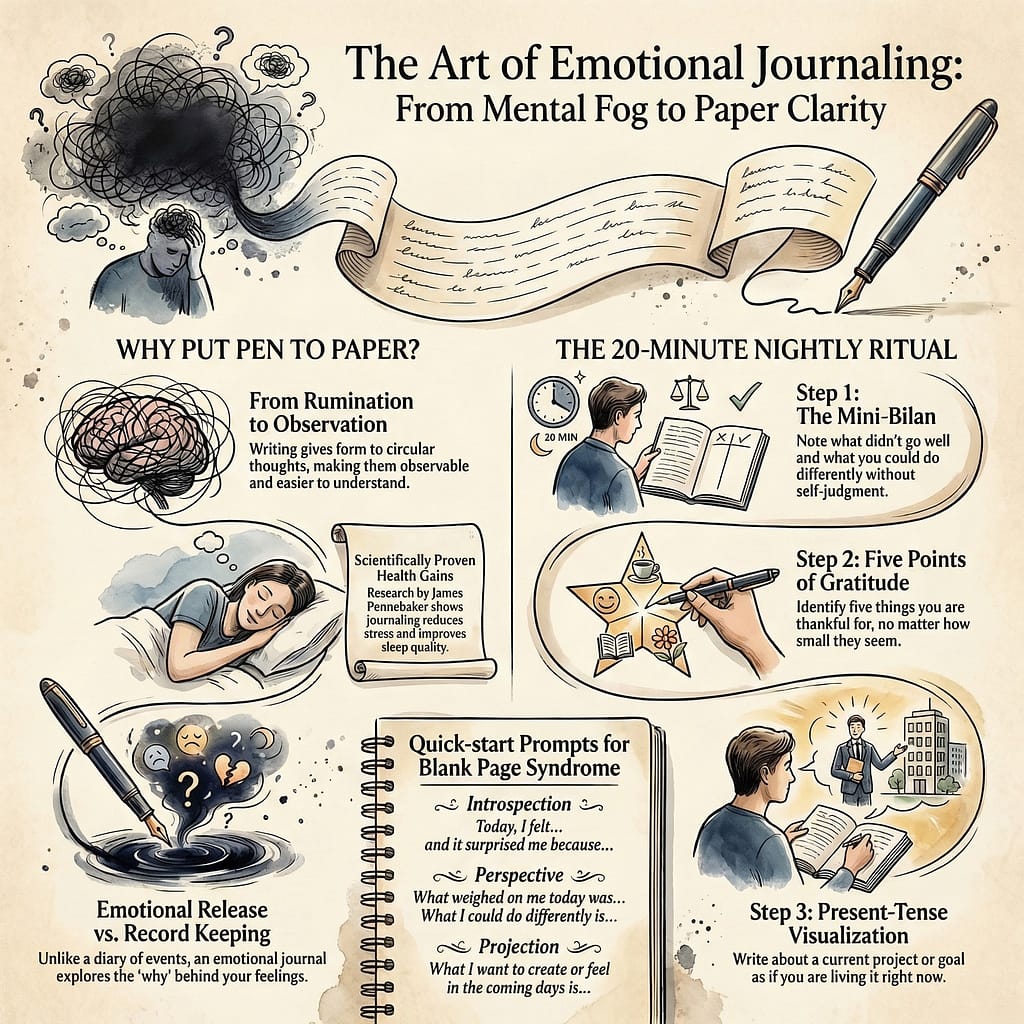
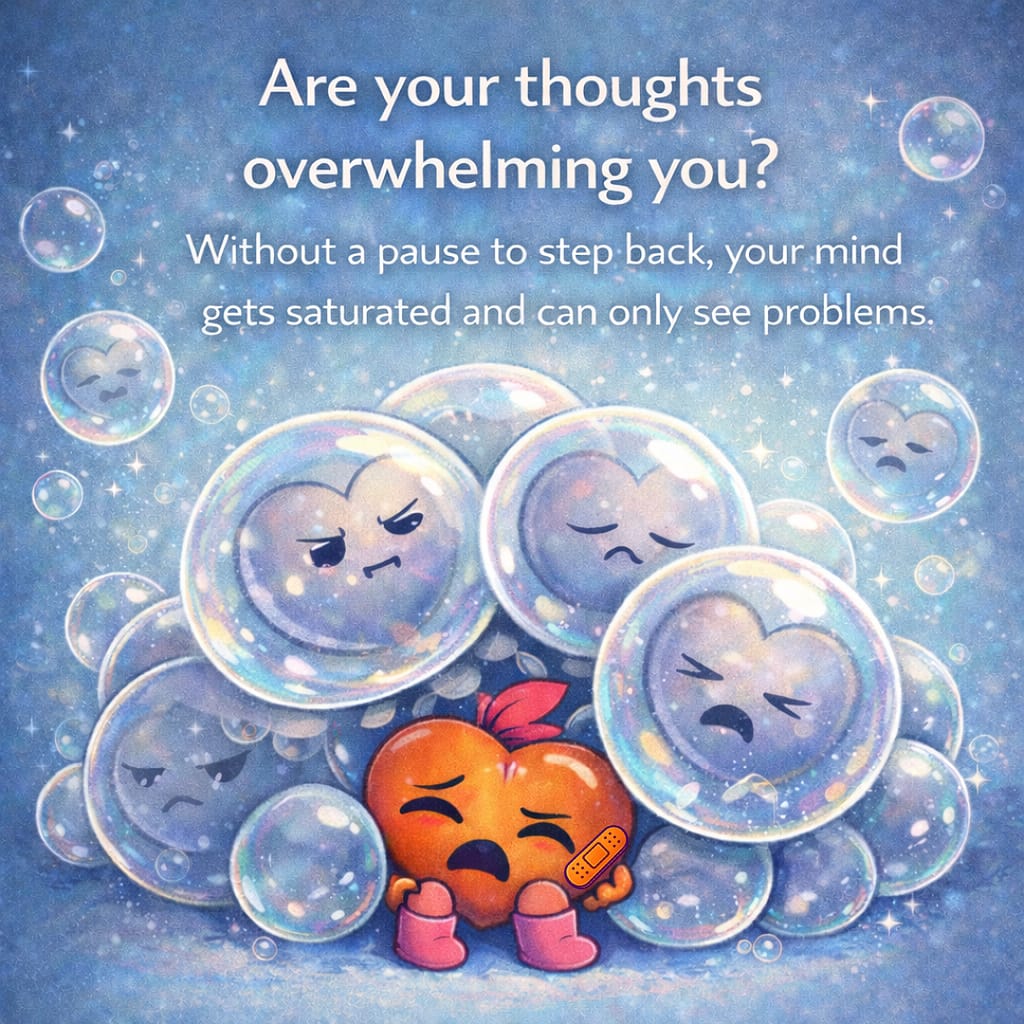
When an emotion stays in your head, it spins. It amplifies, mixes with other thoughts, loses its shape. In reality, you no longer really know what you’re feeling — you’re just ruminating.
Yet as soon as you put that emotion down on paper, something happens. It takes a form. It becomes observable, and what is observable can be understood.
For me, writing your thoughts has always been connected to visualisation. Putting words to what I feel helps me see my desired future in greater detail, imagine it, and sometimes bring it into my reality as if it were already present. It’s a tool for clarity and, in a way, for making things real.
Moreover, keeping a journal fits naturally into the practice of observing your emotions every day. Writing is observing with a magnifying glass.
What science says about emotional journaling
Psychologist James Pennebaker devoted a large part of his career to studying the effects of writing on health. In his now-classic article Writing about emotional experiences as a therapeutic process, published in 1997 in the journal Psychological Science, he shows that writing your emotions acts as a genuine receptacle: putting words to what you feel helps you process, organise and make sense of difficult emotions.
In other words, keeping this type of journal doesn’t just feel good in the moment. Over time, it improves measurable physical and psychological health indicators: less stress, better sleep quality, less intrusive thoughts (Pennebaker, J. W., 1997, Psychological Science, 8(3), 162-166).
This finding echoes what we observe about the link between mood and emotion: unexpressed emotions accumulate and gradually tint your mood over time. An emotion journal breaks this cycle by offering a safe space to welcome, decode and transform those experiences.
The concrete benefits of emotional journaling every day
Keeping an emotional journal regularly brings several things that few other practices offer.
Clarity, first. What seems confused in the mind often becomes clearer on paper. Emotions take on a shape, a name, a context. You notice more easily what had been blurry until then.
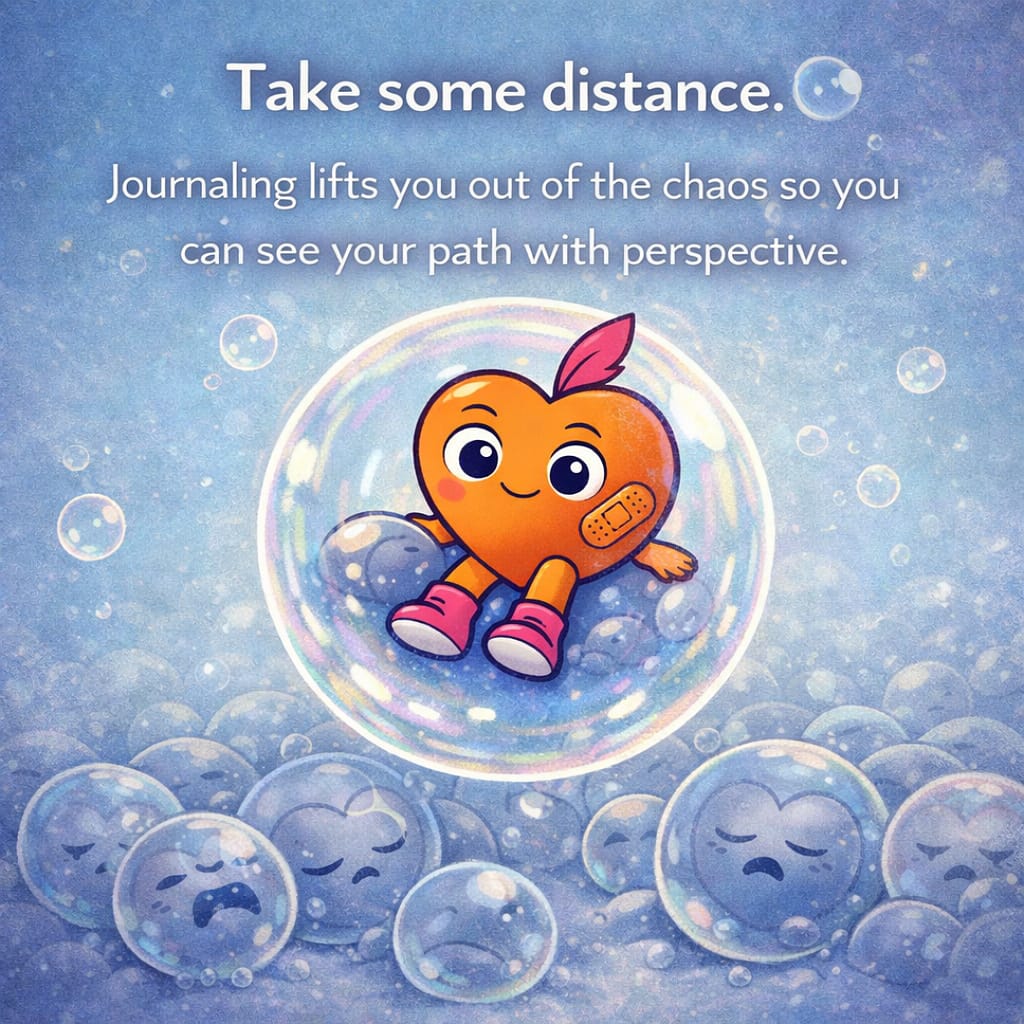
Distance, next. Rereading what you wrote a few days or weeks earlier means looking at yourself from the outside. You see patterns you’d never have noticed in the heat of the moment. Personally, it’s this ritual that helped me identify my recurring patterns and work through emotionally charged situations I didn’t know how to approach any other way.
There’s also a simple shift: the emotion is no longer only in your head. Once it’s on paper, it becomes more visible and often less overwhelming.
In parallel, there’s a grounding effect. Writing about your projects, your desires, what you want to build makes what truly matters to you more visible. The connection to emotional motivation is right there: observing what you feel helps you see more clearly where you stand.
How to start an emotion journal without getting stuck
The blank page is frightening. That’s normal. Most people abandon journaling in the first few days because they don’t know what to write or because they put too much pressure on themselves.
In reality, there’s no right or wrong way to keep an emotional journal. There’s only the way that lasts.
My three-step evening journaling ritual
Here’s the ritual I practise in the evening, before sleep, which has worked for years. First, I quickly note what didn’t go well in the day, specifying what I could have done differently and what I felt in that moment. Not to judge myself, but to do an honest mini review of my day.
Then, I look for at least five things I’m grateful for, even small ones. Finally, I write a few lines about my current project, with the most minute details, in the present tense. That’s my projection section, which I then read aloud to myself.
This three-step ritual takes around twenty minutes maximum. It closes my often busy day, clears my head, and prepares me for tomorrow
If this ritual doesn’t resonate with you, another entry point exists: the Emosupport app I’m currently building. It will let you use the guided journal feature and follow prompts for your journaling practice.
As for the medium: physical notebook, app, text file. What matters is choosing something you want to come back to every evening.
Here’s the ritual I’ve been practising every evening before sleep for years. First, I quickly note what didn’t go well during the day, specifying what I could have done differently. Not to judge myself, but to do a mini review of my day. Then I look for at least 5 things I’m grateful for, even small ones. Finally, I write a few lines about my current project, in the present tense, with the finest details as if I were living the scene right now. That’s my visualisation part, which I then read aloud to myself.
5 sentences to start when you don’t know what to write
When the page is blank, a prompt is enough to unlock the flow. Here are 5 opening sentences you can use directly:
- 1. “Today I felt… and it surprised me because…”
- 2. “What weighed on me today was… What I could have done differently…”
- 3. “Right now I feel… I think it’s connected to…”
- 4. “5 things I’m grateful for today: …”
- 5. “What I want to create, live or feel in the coming days: …”
These prompts cover the three essential dimensions of this practice: introspection, taking a step back, and projecting towards what you want to build.
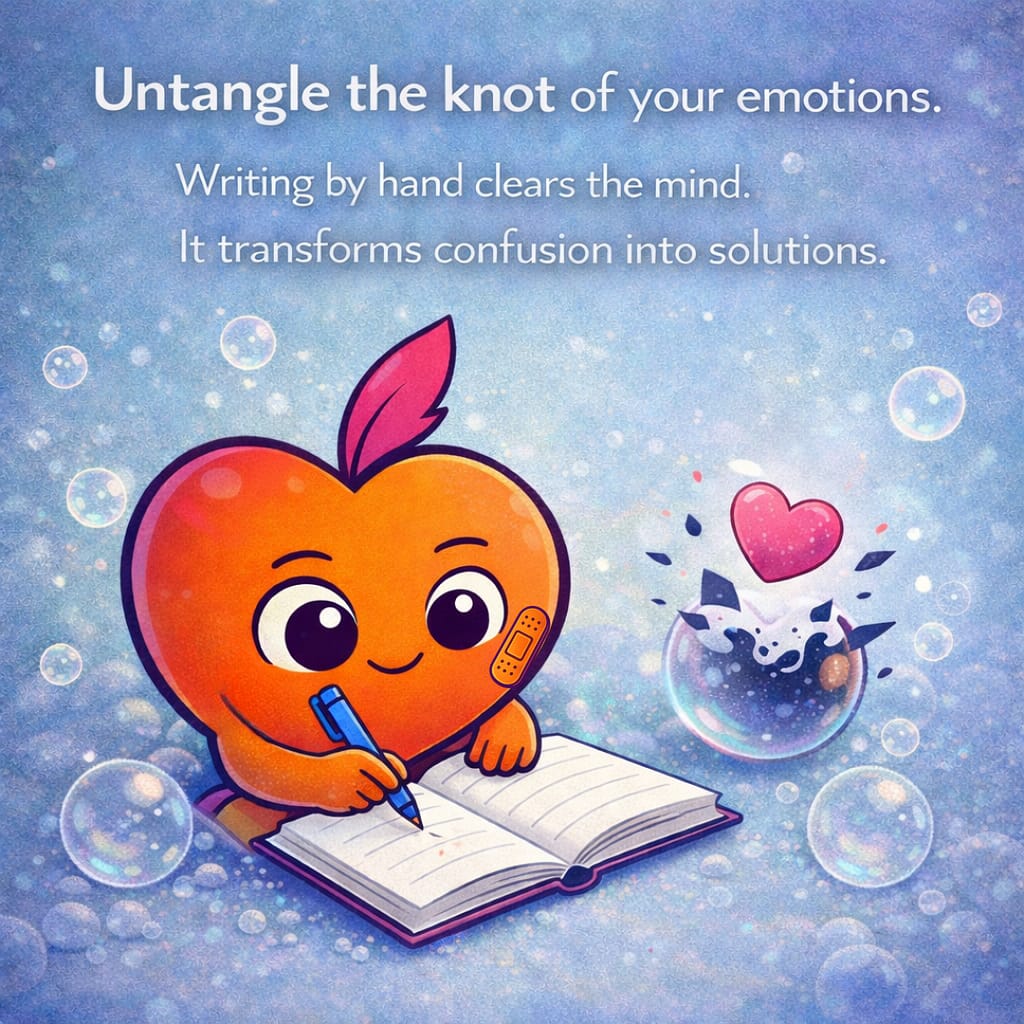



Emotional journaling: where to start tonight
This practice isn’t reserved for people who love writing. It’s a tool accessible to everyone, that requires just a few minutes and a little consistency.
You don’t need to write perfectly. You don’t need to write for long. You just need to start. That’s why tonight is the best moment!
Take 10 minutes. Put an emotion from the day down on paper. Note one thing you’re grateful for and write one sentence about what you want for tomorrow.
If you want to go further and combine an emotion journal with tracking your emotions every day, that’s exactly what the emotional motivation app Emosupport offers. And to join the newsletter and try the app early, become an Emosupporter. No pressure. Just to see.
Have you ever tried emotional journaling? What helped or held you back? Share it in the comments.
At the same time, I’m still building the application.
But I also write stories.
The Letters Between the Lines are letters sent to you with no expectation of a reply.
Fragments of a story you uncover without having all the pieces.
And sometimes, that’s exactly where it all begins.
FAQ: emotional journaling
It’s a regular introspective writing practice centred on your emotions, feelings and inner state. Unlike a classic diary that records events, an emotion journal focuses on what you feel, why, and what that reveals about yourself. It’s a tool for introspection and perspective, not just a notebook.
Yes, and it’s scientifically proven. The benefits of journaling are documented by psychologist Pennebaker’s work: writing your emotions reduces stress, improves sleep and helps organise your thoughts. Simply putting words to what you feel helps the brain regulate the intensity of the emotion.
Start with a simple prompt: “Today I felt…” or “What weighed on me today was…”. You don’t need to write for long. Five honest lines are worth more than a forced page. With practice, the words come more naturally.
A diary records the events of the day. An emotion journal focuses on what you feel about those events. One documents what happened; the other explores what it stirs inside you. The two can be combined, but the angle is different.
There are several. Emotional journaling focuses on feelings and inner state. Gratitude journaling notes what’s going well. Productivity journaling tracks tasks and goals. Free journaling has no particular structure. In all cases, what matters most is consistency, not format.
No. Consistency helps, but it doesn’t need to be daily. Three times a week, or even just after a significant or difficult moment, is enough to start noticing patterns in your emotions. The goal isn’t discipline—it’s observation.