
We often lump everything together: emotions, emotional intelligence, motivation. As if knowing how to manage your emotions was enough to move forward. Yet you’ve probably experienced this: you know your emotions, you can name them, you’ve read books about it… and despite all that, some days, you’re stuck. Nothing moves. The drive isn’t there.
That’s where the nuance matters. Because emotional intelligence and emotional motivation are not the same thing — even if they’re connected. And mixing them up is often what makes us feel guilty for no reason.
Emotional intelligence, in short
The concept of emotional intelligence was formalized in 1990 by psychologists Peter Salovey and John Mayer at Yale University, then popularized in 1995 by Daniel Goleman in his book Emotional Intelligence: Why It Can Matter More Than IQ.
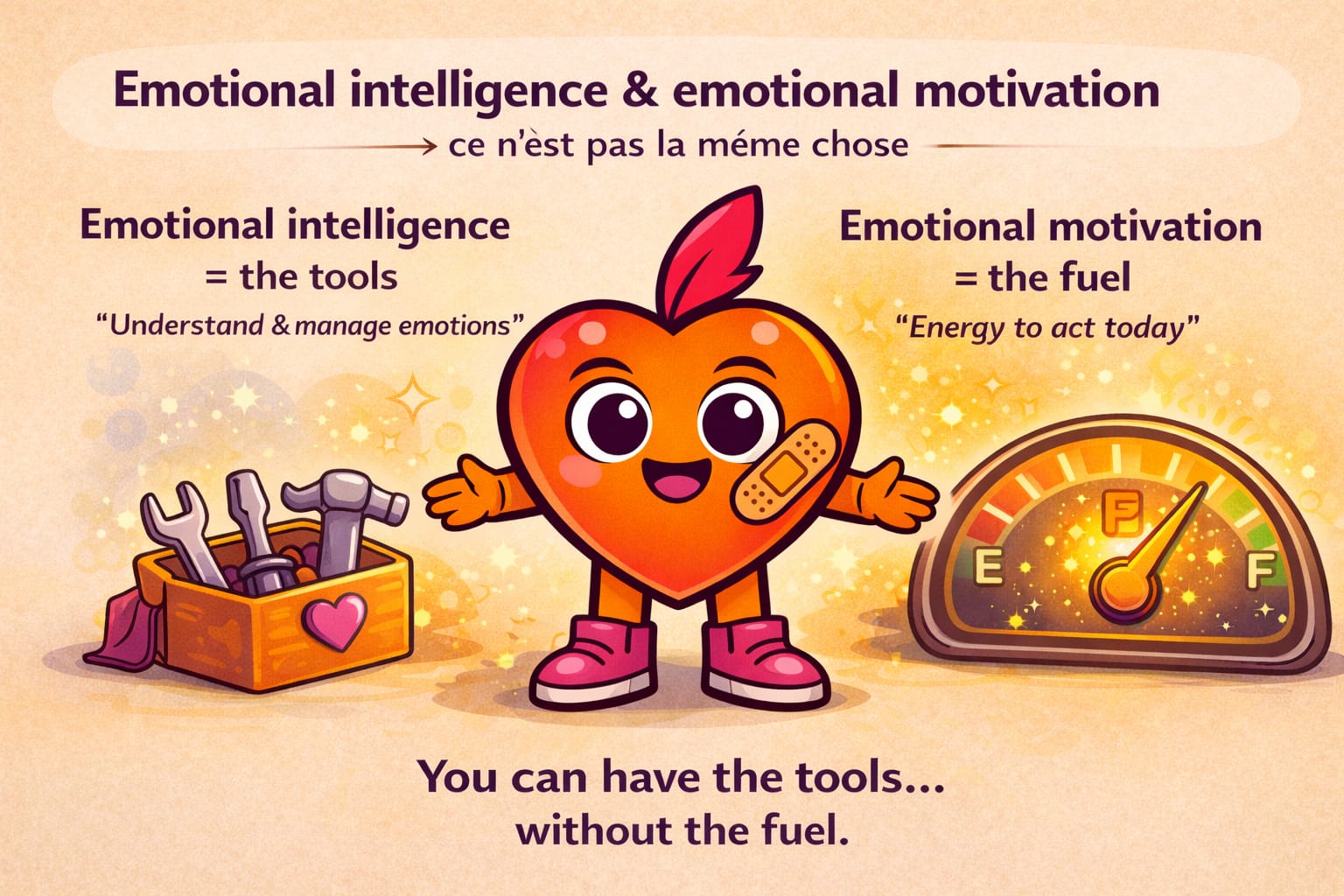
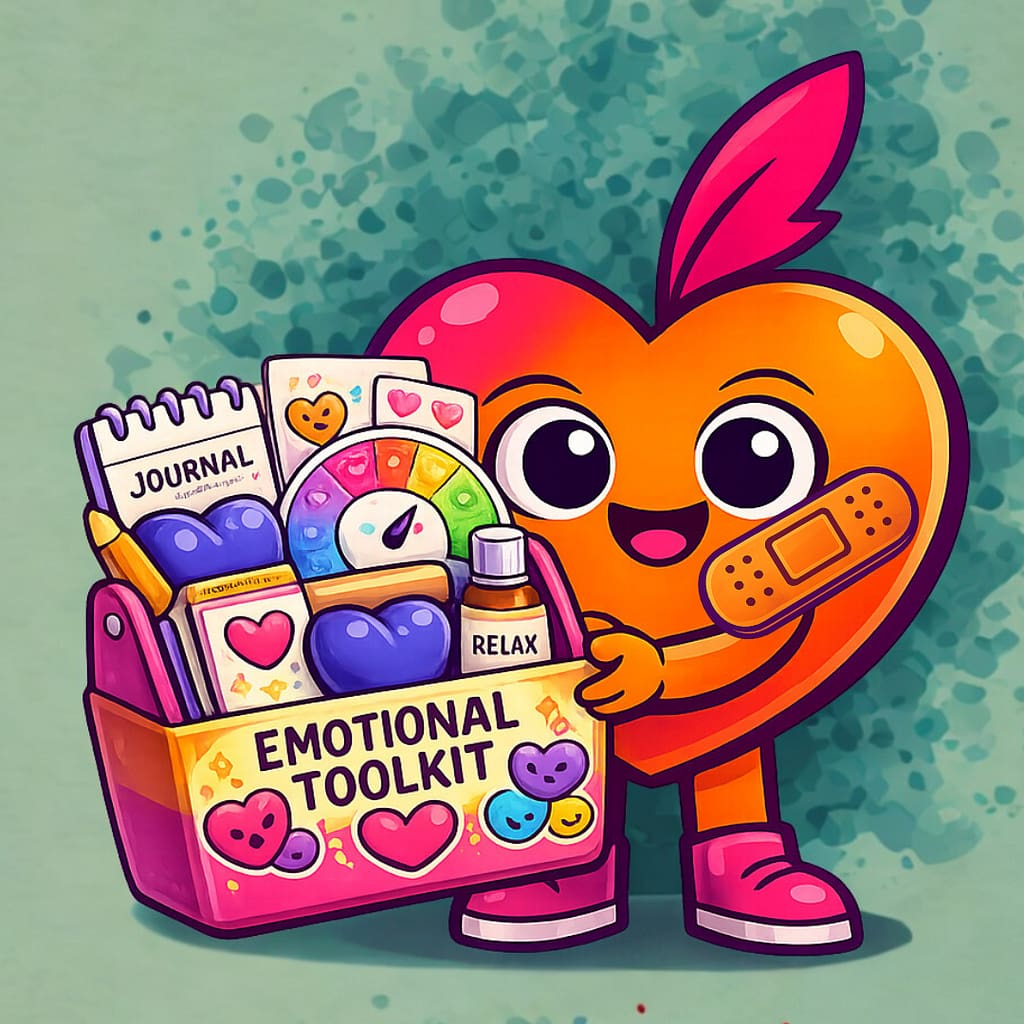
In short, it’s your ability to recognize, understand, use and regulate emotions — yours and other people’s [link 2]. If you want a simple image: it’s your emotional toolbox. You learn to identify what you feel, not to blow up, to listen to others, to make better decisions.
It’s powerful. It’s useful. But it’s only part of the equation.
Because having a full toolbox doesn’t mean you have the energy to open it.
Emotional motivation is something else
Emotional motivation is not a skill you check off on a list. It’s the emotional energy you actually have available to act, today, in your real state. You work on it indirectly — by taking care of your mood, your mental load, your sleep, your environment — rather than adding another “skill” to your inner résumé.
In one sentence: it’s what your emotional state allows — or doesn’t allow — you to do today.
Research in motivational psychology, particularly by Gable and Harmon-Jones (2010), shows that emotions have their own motivational dimension, with two components: intensity (how strongly you feel pushed or held back) and direction (you move toward something or you pull away) [link 3].
In practice, it’s what makes the difference between “I know exactly what to do” and “I can’t do it today.” Your emotional motivation depends on your current mood, your mental load, your accumulated emotions, your sleep quality — and the way you talk to yourself.
If you want to dive deeper into this concept, I talk about it in detail in this article on emotional motivation.
Three concrete differences
Toolbox vs fuel
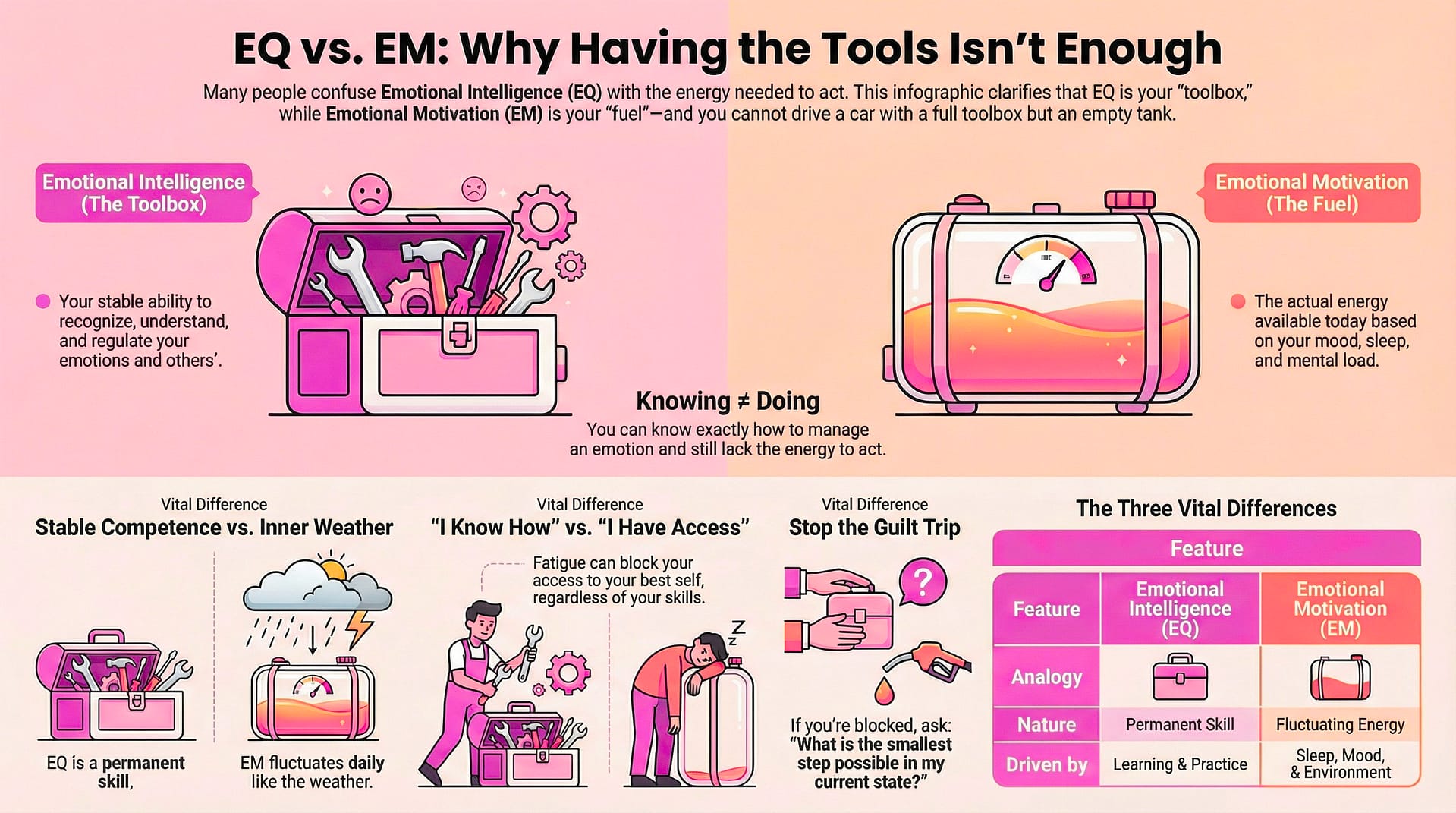
Emotional intelligence is the toolbox. Emotional motivation is the fuel. You can have a chest full of very sophisticated tools… with a completely empty tank.
Stable skill vs inner weather
Your emotional intelligence, once developed, stays relatively stable. It sharpens over time, like a skill. On the other hand, your emotional motivation fluctuates like weather: it changes depending on your sleep, your cycle, your mental load, the events of your day, the way you’ve been treating yourself lately.
Telling someone “you lack emotional intelligence” when they simply lack emotional resources is deeply unfair.
Know-how vs access to your best version
Emotional intelligence is “I know how to do this.” Emotional motivation is “Do I have access to that version of me today?”
You might, in theory, know how to talk to yourself with kindness. But if you’re exhausted, in survival mode, you’ll probably fall back into “I’m useless, I never get anything done.” It’s not because you don’t know what to do. It’s because, emotionally, you don’t have access to it right now.
The example that says it all
You’ve read books on emotional intelligence. You know your emotions carry a message, that you should listen to yourself, that being kind to yourself matters.
And yet there you are, in front of your screen, unable to launch that project, reply to that email, make that appointment.
The problem isn’t that you don’t know how to manage your emotions. The problem is that you’re emotionally drained: too much fear, too much fatigue, too much accumulated pressure. Your emotional motivation is at zero. And no emotional skill can make up for an empty tank.
Why making the difference changes everything
As long as you mix the two up, you risk telling yourself: “I’ve read tons of stuff about emotions and I’m still stuck, so I must be the problem.” Or: “I lack willpower.”
When in reality, the question would be: “In the state I’m in today, what tiny step is emotionally possible for me?”
That’s a question I learned while building Emosupport — an emotional motivation app born from my HR background and my conviction that it’s not discipline that’s missing first, it’s the drive.
Telling emotional intelligence and emotional motivation apart means you stop confusing a lack of fuel with a lack of skills. You step out of the blame game. And you start asking the right question: not “why can’t I do this,” but “from where I am right now, what’s the next possible step?”
What’s next?
You can be very emotionally intelligent and still be drained. You can know exactly what to do and still not be able to do it. That’s not a bug. It’s just that your toolbox is full… but your tank is empty.
The real question is no longer “how do I manage my emotions better?” — emotional intelligence takes care of that. The real question is: “How do I get the drive back when it’s gone?”
That’s exactly what we’ll explore in the next article: how to nurture your emotional motivation on a daily basis — practically, without pressure, at your own pace.
FAQ — Emotional Intelligence vs Emotional Motivation
It’s your ability to recognize, understand and regulate your emotions — yours and other people’s. A skill that develops over time and stays relatively stable. Think of it as your toolkit.
It’s the fuel. You can have a full toolkit and an empty tank. Emotional motivation is the emotional energy you actually have available to act today — not in theory, in your real state right now.
Because knowing how to manage your emotions isn’t enough when the tank is empty. It’s not a lack of skills — it’s a lack of emotional resources. That’s not the same thing, and most importantly, it’s not your fault.
It’s nourished indirectly: sleep, mental load, the way you talk to yourself, your environment. You don’t “develop” it like a skill — you create the conditions for it to come back.
With the simplest question: “from where I am today, what is the smallest possible step?” Not the best one. Not the most ambitious. Just the next one.